How To Unleash The Hidden Force Multipliers Of Organizational Performance

Unleash talent
Imagine you were running an airline, and you had $1 million to spend on developing the skills and capabilities of your pilots. In terms of their span, is the best time to invest it:
a) at the start of their flying career, or
b) after they’ve been flying for 20 years?
Weirdly, when it comes to nearly every large organization, the answer is b.
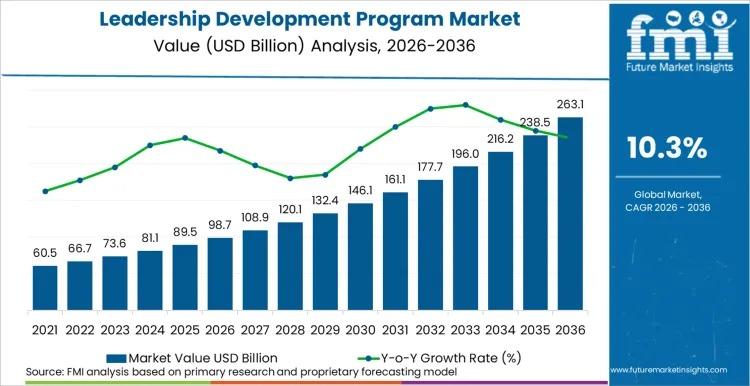
More money is spent developing leaders after they arrive in the executive suite than on front-line managers, who have the most significant day-to-day contact with staff and customers. Hard data is scarce regarding the numbers, but corporate leadership development spending is thought to be over $30 billion annually, with proportionally more of it directed toward senior executives.
Senior leaders are lavished with development. They’ll be encouraged to participate in leadership retreats, obtain a personal coach (~$30,000 for 6 months), and enroll in pricey leadership programs (for example, a five-day Authentic Leadership program at Harvard costs $16,000, while the four-week INSEAD Advanced Management Programme costs €44,000). These educational investments undoubtedly benefit the recipients, though the evidence for a positive return for the organization is less clear.
The Organizational Blindspot
The peculiar allocation of resources reveals a significant bias in organizations’ thinking about talent development. What makes it particularly perplexing is that research consistently shows that frontline leadership quality disproportionately impacts overall organizational performance.
A decade-long research program by Nick Bloom and John Van Reenen found that applying basic management disciplines like performance reviews, structured hiring practices, and effective team leadership – all the work of front-line leaders – is linked to greater innovation, productivity gains and performance. Good, basic management and leadership practices return twice the benefits of IT implementation.
Yet despite this evidence, the transition from employee to manager remains treacherous and poorly handled. The new role brings new responsibilities, requires new perspectives on organizations, and requires new ways of relating to staff, peers, and bosses. No matter how sensible it seems to train managers before they enter the role, hardly any firms do it. An English study revealed that nearly three-quarters of all firms fail to train first-time leaders.
So it’s little surprise to learn that perhaps 60% of new managers underperform or fail in their first two years – primarily because they receive inadequate training and support. Most people become managers around age 30 but don’t receive leadership training until they’re about 42, leaving them to figure out leadership fundamentals through trial and error for over a decade.
The Value Front-Line Leaders Deliver
Organizations should care more about these first-rung leaders because they are, quite simply, the force multipliers in organizational performance.
First-line managers translate abstract strategies into concrete actions. They oversee the implementation of policies, customer experience, and employee engagement levels. Gallup research indicates that managers account for at least 70% of the variance in employee engagement scores across different business units. Manager behavior directly impacts productivity, customer satisfaction, and, ultimately, profitability.
These leaders also serve as the organization’s early warning system. They’re close enough to the front lines to spot problems before they become crises and to identify opportunities that might be invisible from the executive suite. Research indicates that organizations with strong frontline leadership development programs outperform peers by up to 25% in revenue growth precisely because these leaders can more effectively implement strategies while providing valuable feedback loops.
Perhaps most importantly, first-level leaders act as talent developers. They identify promising employees, offer coaching and mentoring, and manage the experiences that cultivate the next generation of organizational leaders. In many ways, they are the hands-on architects of the organization’s talent pipeline.
Why Does So Much Money Get Spent on Executives?
If first-rung leaders are so critical to organizational success, why do companies overweight executive development?
First, there’s the top-of-the-pile bias. In every human society, rewards accrue to those at the top. Priesthoods, monarchies, warlords, C-suite status: there ar and always will be people who want to get to the top because it affords a better standard of living and much more prestige. If you are an executive, it will feel entirely right and proper that people like you should get the big development dollars and attend beautiful campuses in Fontainebleau, Boston, or Oxford.
This is partly because organizations often fall prey to James Meindl’s ‘The Romance of Leadership’ theory, which argues that people over-attribute organizational success to the actions of individual leaders (and failure is the result of chance, bad luck, and magic). This self-serving idea fuels the belief that investing in top executives leads to firm-wide performance gains despite limited evidence.
These beliefs operate in the same way ‘trickle-down’ economics is meant to work. The eminent psychologist Rob Kaiser contends that the benefits of executive leadership development accrue more to individual career success than to organizational success. Ironically, leadership training at lower levels (e.g., frontline and middle management) often has a more substantial operational impact because it directly affects decision-making and execution.
Elite institutions, of course, are incentivized to promote and embed these views, which leads to a pervasive misattribution about the nature of executive success. Executives believe that because a) they are in the role, and b) they benefited from elite development programs, then c) continued investment in such programs is justified, reinforcing the “leader as hero” myth.
That, in turn, fuels another cause of weird leadership development dynamics: the executive belief that we are all (mostly) unicorns at the top.
Searching for Scarce Talent: A Flawed Strategy
The law of averages tells us that, sadly, executives are fairly standard people.
That doesn’t stop the manic hunt for “A players”—people who excel across multiple dimensions of ability and personality and whose performance will easily outstrip everyone else.
I’m not saying unicorns don’t exist and add outsized value, but the data indicates that the unicorn profile—individuals who are hyper-smart, calm under pressure, strategic thinkers, highly organized, emotionally intelligent, and consistently high performers— are exceedingly rare.
If you’re looking for someone who scores better than 50% of the population in just three traits – intelligence, organization, and emotional stability – you’ve narrowed the pool from 100 individuals down to about 16. If you seek someone who is next level, say one standard deviation above average in all three traits, you’re now searching in a pool that includes fewer than 1% of all people on Earth.
Genuinely exceptional talent doesn’t exist in the quantities organizations imagine. Yet, organizations continue to divert resources toward finding unicorns rather than developing the talented but imperfect front-line leaders they already have.
From Hapless to Helpful: The ROI on Investing in the Front Line
The alternative to spending scarce dollars at the top is straightforward: invest in developing solid, effective first-rung leaders at scale. This approach yields a substantially higher return on investment for several reasons.
First, the performance gap between untrained and well-trained frontline managers is usually much greater than between good and excellent executives. A well-trained new manager can swiftly transition from hapless to helpful, whereas the incremental gains from elevating an already-competent executive to excellence are often marginal.
Second, frontline management development tends to be less costly per person than executive development. There is a higher ROI for developing first-time managers. Organization-wide programs that build fundamental leadership capabilities across all new managers create broader organizational capacity at a lower per-person cost.
Third, investing in first-rung leaders creates cascading benefits throughout the organization. When these leaders improve, their teams become more engaged and productive. This improves current performance and strengthens the organization’s talent pipeline, as engaged employees are more likely to develop into effective future leaders.
Ultimately, cultivating frontline leaders mitigates the significant costs linked to management failure. When new managers face challenges, their teams suffer high turnover, low productivity, and rising conflict. The expense of replacing departing team members will swiftly surpass the investment needed to develop a competent manager in the first place.
If You Are a Front-Line Leader, Take Things Into Your Own Hands
Don’t wait for formal training that might never arrive. Here’s how to take charge of your development despite organizational underinvestment:
First, actively broaden your experiences beyond your current role. As Stanford’s Jeffrey Pfeffer notes, “You learn leadership by practicing it, not by reading or discussing it.” Pursue cross-functional projects, volunteer for task forces, or look for temporary assignments in related fields. The most significant growth comes from challenging experiences that compel you to develop new skills. The more diverse situations you encounter early in your leadership journey, the more adaptable and effective you will become.
Second, create a personal board of directors instead of relying on a single mentor. Engaging multiple mentors—each providing different perspectives and areas of expertise—promotes greater growth than the traditional one-mentor approach. Find “disagreeable givers”—individuals who care enough to share uncomfortable truths while genuinely wanting you to succeed.
Seek out experienced leaders from diverse functions, backgrounds, and even industries. Pose specific questions about your challenges and observe how they make decisions, resolve conflicts, and interact with various stakeholders.
Third, tap into the vast array of evidence-based resources available for free online. Follow researchers such as Bob Sutton, Tomas Chamorro-Premuzic, and Amy Edmondson, who translate rigorous research into practical insights for leadership. The Science of People blog, HBR’s free articles, and podcasts like “WorkLife with Adam Grant” offer high-quality, research-backed guidance without the $40,000 executive program price tag. Seek content that addresses your unique challenges rather than general leadership theories.
Fourth, create a personal learning curriculum to target the specific skills often missing in new managers. My list would include giving feedback, managing performance, delegating effectively, and influencing others. My friend Tomas Chamorro-Premuzic points out, “Most people believe they need a charismatic personality to lead effectively, but what they really need is a structured approach to essential management tasks.”
Fifth, join or create a peer learning community. Other new managers are facing similar challenges, and sharing experiences accelerates learning for everyone. Whether it’s a formal community of practice within your organization or an informal group that meets monthly, discussing real problems with peers provides emotional support while generating practical solutions.
Remember that your development is too important to be left entirely to your organization. As Henry Mintzberg observed, “Leadership, like swimming, cannot be learned by reading about it.” By taking an intentional, evidence-based approach to your development, you can become an effective leader despite organizational neglect of first-rung leadership development.
If You Are a Corporate Leader, Do These Three Things
If you hold organizational decision-making power, there are three unlocks for your organization’s hidden force multipliers:
Begin by reevaluating your budget for leadership development. Challenge the assumption that executive training should get the largest portion of resources. Direct funds toward programs that start before management promotion and continue through the first 18 months in the role. Focus on practical skills rather than theoretical leadership concepts, since new managers need tools to handle their daily challenges.
Second, establish support systems for new managers. Assign mentors to offer real-time guidance, create peer networks where new leaders can discuss challenges and solutions, and ensure that mid-level managers fulfill their role in developing entry-level leaders. The most effective development occurs through formal training, coaching, and on-the-job experience.
Third, change how you measure management performance. Many organizations evaluate new managers with the same metrics used for individual contributors, incentivizing them to stick to old roles rather than developing their teams. Measure what matters: team effectiveness, employee engagement, and delivery.
All organizations will recruit average candidates. Reevaluate your beliefs about the talent pool.
Fortunately, airlines invest in training pilots before they take control of the aircraft. In a world where exceptional talent is rare, the most intelligent investment is in developing the skills of your first-line leaders – the frequently overlooked force multipliers who convert strategy into results every day.
link